
For roofers
Scissor-Lift & High-Lift Dump Trailers for Roofing: Options Compared
A roofing crew does not need a dump trailer that tips. It needs one that lifts. The best dump trailer for roofing is the one that gets its container up to the roof edge, catches tear-off without a second handling step, and gets onto the property without leaving ruts. That rules out most of the trailers built for farms and landscape supply yards.
Updated September 25, 2026 · By the Equipter team, Leola, PA
This guide compares the four trailer types roofers look at, what each one does to your crew's day, and a checklist for choosing between them. We build one of them, the Equipter® 4000, so read that section with that in mind.
Why roofers want a high-lift dump trailer
A standard dump trailer tilts its bed to unload. That is useful at the landfill and not much use on the job, because the debris still has to get from the roof into the trailer. Crews end up carrying tear-off across the lawn in wheelbarrows or throwing it off the edge onto tarps and loading it twice.
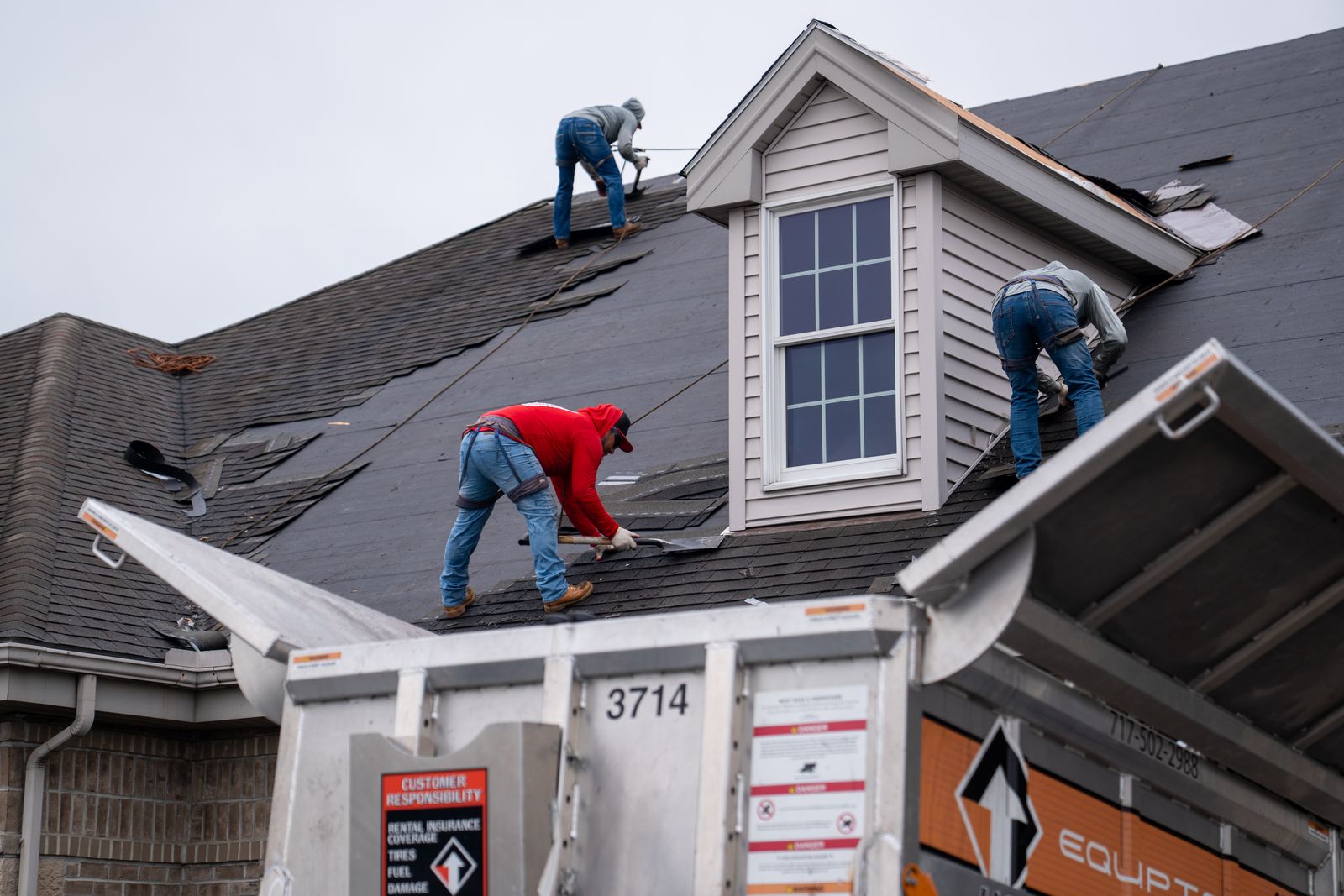
A high-lift dump trailer raises the whole container vertically, so the crew drops shingles straight in from the eave. The debris is handled once: off the roof, into the container, to the dump.
Scissor-lift vs. hydraulic-lift vs. drivable debris trailers
A scissor-lift dump trailer uses a scissor-style hoist, usually driven by one hydraulic cylinder, mounted under the middle of the bed. As the hoist opens, it pushes the front of the bed up so the bed tilts back on its rear hinge and dumps out the tailgate. These trailers are rated by dump angle rather than lift height; one national dealer lists up to 47 degrees for its scissor models. The back of the bed stays near the ground, so a scissor-lift trailer is built to unload at ground level, not to hold debris at roof height. It is towed into position, so access is limited to where the tow vehicle can go.
A hydraulic-lift or telescopic dump trailer raises the bed with one or more hydraulic cylinders. Most of these are built to dump, not to hold a raised container at roof height while a crew works. Check the manufacturer's rating for working at full lift before you plan on it.
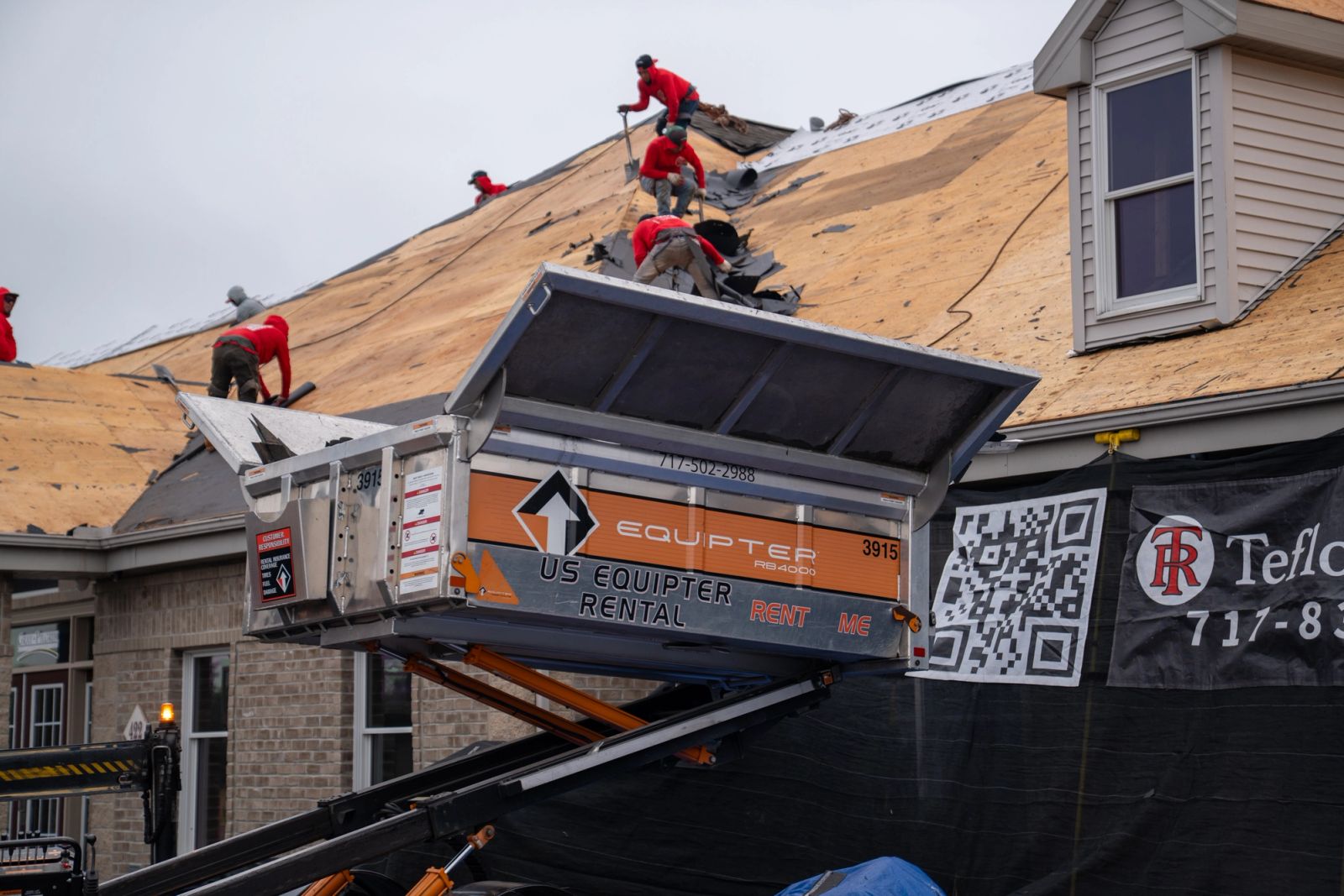
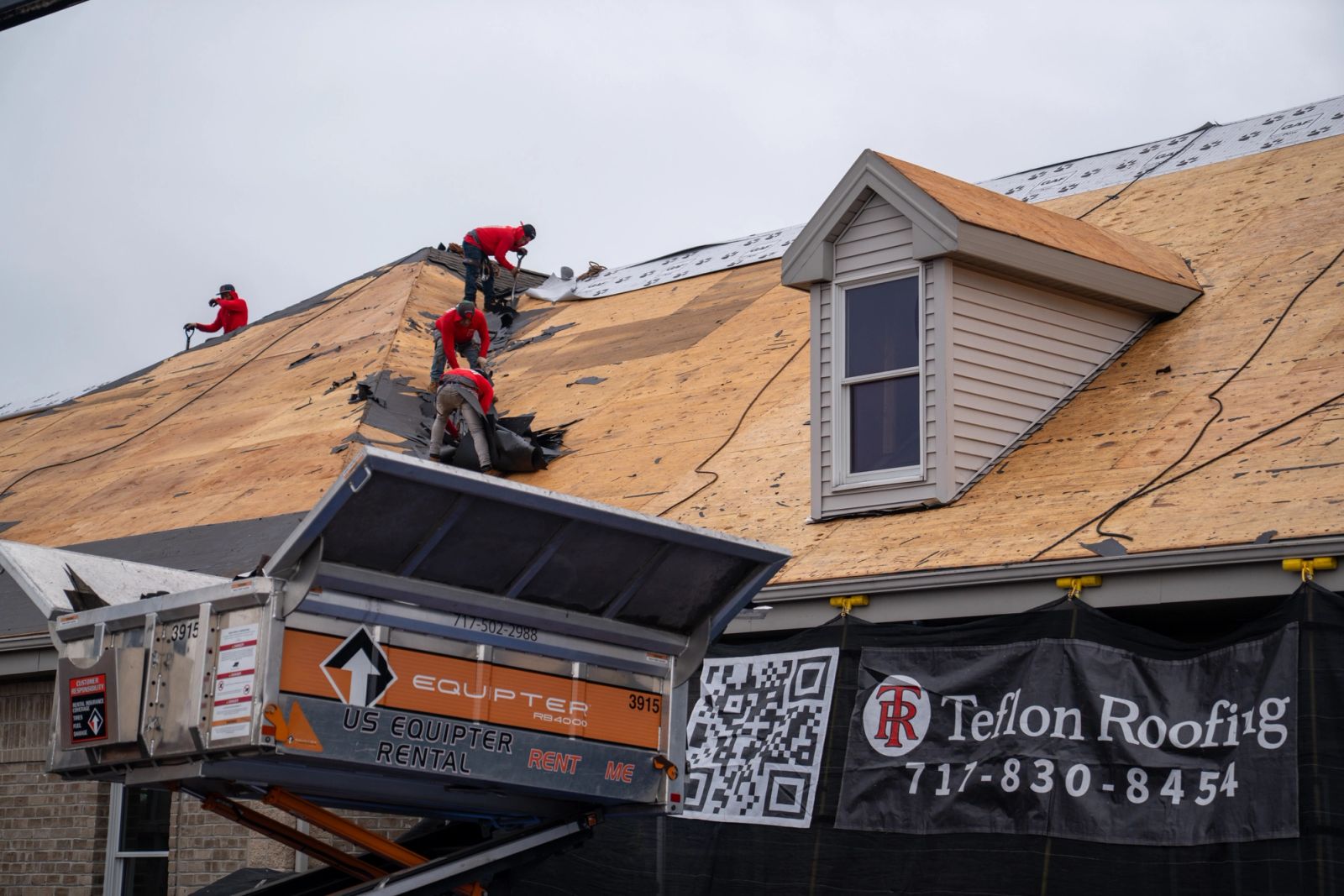
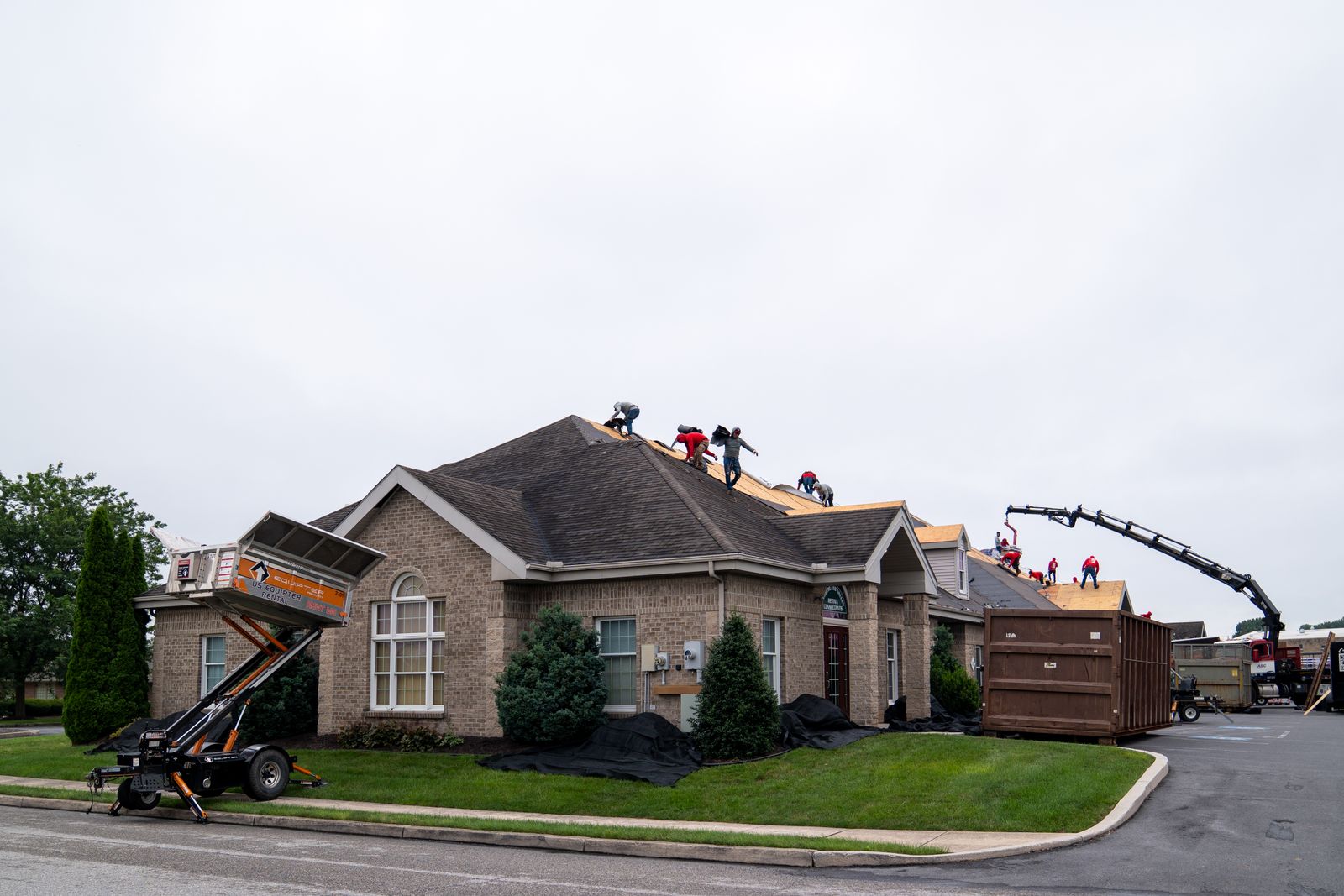
A drivable debris trailer is towed to the job, unhitched, and driven under its own power to the side of the house. The container then lifts to the roofline and stays there as the catch point for tear-off.
- Scissor-lift trailer: tilts the bed to dump at ground level; placement limited to where your truck can back it in.
- Hydraulic or telescopic trailer: built mainly to dump; confirm its rating for working at height.
- Drivable debris trailer: lifts to the roofline and drives itself into backyards, around landscaping and up to the wall.
Lift height matters: the Equipter 4000's 12-foot lift
For residential tear-off, the question is whether the container reaches the eave. The Equipter 4000 lifts 4,000 lbs to 12′0″ and holds 4.1 cubic yards of debris. It also rolls back 4 feet, so the container can reach over shrubs, AC units and flower beds instead of parking in them.
That height covers the eave of most one- and two-story homes. It will not reach a third story, and for consistently tall work you will want a different setup. For more on how the height compares with other roof-loading equipment, see our shingle lift and ladder hoist buying guide.
Roll-off and bin trailers vs. drivable trailers
Roll-off dump trailers and bin trailers carry a removable container that is set on the ground and picked up later. They hold more volume per trip than a drivable trailer, which is why they suit large demolition and cleanout jobs.
On a roof, the trade-off is placement. A roll-off bin sits where the truck can drop it, usually the driveway, and the crew carries debris to it. A drivable trailer comes to the debris. Many contractors run both: the Equipter catches tear-off at the house and empties into a dumpster or at the transfer station. We cover that pairing in the Equipter 4000 vs. roll-off dumpsters.
What about tilt trailers?
Tilt trailers are built to haul equipment, not debris. The bed inclines so you can drive a mower or skid steer on and off. They are useful in a contractor fleet, but they neither lift nor catch tear-off, so they do not replace a debris trailer.
Buyer checklist for a roofing dump trailer
Before you compare prices, answer these for your own jobs:
- Lift height: does the container reach the eave on the homes you usually roof?
- Working at height: is the trailer rated to hold a raised load while a crew works above it?
- Placement: can it get into backyards and around landscaping, or only where the truck can back it?
- Ground impact: how heavy is it, and how does it treat lawns and driveways?
- Capacity: how many squares of tear-off per load, and how many dump runs per job?
- Towing: what vehicle and hitch does it need? Check your truck's tow rating.
- Service and support: who fixes it, and how quickly, in the middle of roofing season?
If most of your answers point to reach, placement and property protection, a drivable debris trailer is the category to test first. Our 4 questions to ask before you buy a hydraulic dump trailer goes deeper on the hydraulic side.
Answers
Frequently asked questions
What is a scissor-lift dump trailer?
A scissor-lift dump trailer uses a scissor-style hydraulic hoist under the middle of the bed to tilt the bed back and dump the load, often at an angle of about 45 degrees. It does not raise the container to the roof edge, so roofers still have to carry tear-off to it.
How high does a roofing dump trailer need to lift?
High enough to reach the eave of the homes you work on. For most one- and two-story houses, a 12-foot lift like the Equipter 4000's reaches the roof edge. Three-story work needs a ladder hoist, conveyor or crane for materials instead.
Scissor lift vs. hydraulic lift dump trailer: which is better?
Both are hydraulic: a scissor hoist lifts from the middle of the bed, while a telescopic cylinder pushes from the front. Either can dump a heavy load well. For roofing, neither holds the container at roof height, so the better question is whether you need a trailer that dumps or one that also catches tear-off at the eave.
What is the best dump trailer for roofing?
The best dump trailer for roofing reaches the eave, catches tear-off directly from the roof, and can be placed next to the house without damaging the property. A drivable trailer like the Equipter 4000 does all three; a roll-off bin suits high-volume cleanouts.
See it on a real tear-off
The fastest way to decide is to run one on your own job. Build your Equipter 4000 to spec, or rent one for your next tear-off.
Keep reading
How to get material onto the roof.
Cost, damage and crew time compared.
Tear-off weight and loads, worked out.