
Crew costs
Roofing Labor Cost per Square: How to Calculate It (and Cut Tear-Off Hours)
Labor is usually the largest cost on a roof you control. Material prices are set by the supplier; labor cost per square is set by how your crew works. That makes it the number most worth knowing, and the one most contractors estimate by feel.
Updated September 29, 2026 · By the Equipter team, Leola, PA
This guide shows how to calculate your roofing labor cost per square, where the hours actually go on a tear-off, and which changes cut those hours without cutting corners.
What roofing labor cost per square includes
A roofing square is 100 square feet of roof surface. Labor cost per square is the total cost of the people who worked the job divided by the number of squares installed. To get a true number, include:
- Wages for every crew member, including the foreman.
- Payroll burden: employer taxes, workers' compensation, benefits and paid time off.
- Non-installing time: setup, tear-off, cleanup, loading material and dump runs.
- Travel time to and from the job, if you pay for it.
Leaving out tear-off and cleanup is the most common reason a labor number looks better on paper than it is.
How to calculate it (worked example)
Use this formula:
Labor cost per square = (total crew hours × loaded hourly cost) ÷ squares installed
Your loaded hourly cost is the wage plus the burden for each worker. If you do not track burden separately, start with your accountant's figure for your workers' comp class and payroll taxes.
Here is an example using made-up numbers, not market rates:
- A crew of four works 9 hours on a 25-square tear-off and re-roof: 36 crew hours.
- Their average loaded cost is $40 per hour: 36 × $40 = $1,440.
- $1,440 ÷ 25 squares = $57.60 of labor per square.
Now split those 36 hours by task. If 10 of them went to tear-off debris, hauling and cleanup, then about $16 of every square's labor is spent moving trash. That is the part equipment can change.
Crew size and tear-off hours
There is no single right crew size; it depends on the roof, the pitch and how the work is split. What matters for cost is how many of those people are doing non-installing work at any moment.
On many tear-offs, one or two crew members spend most of the morning carrying debris: raking it off the roof, loading tarps or wheelbarrows, walking it to a dumpster in the driveway, and picking up nails. Those are paid hours that do not put a single shingle on the roof.
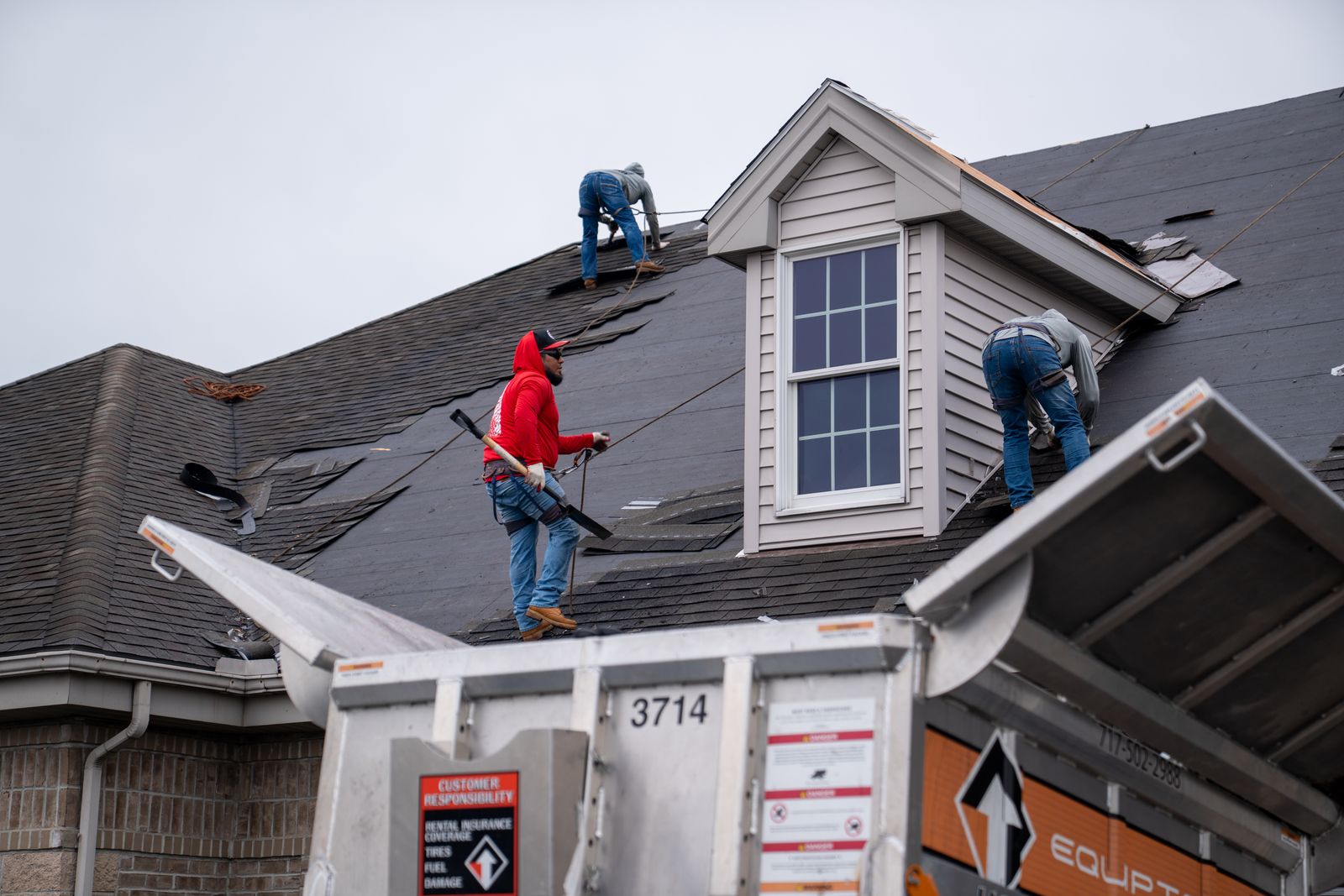
Where tear-off labor goes
Time your crew on your next few jobs and record hours in these buckets:
- Stripping: removing shingles, underlayment and flashing.
- Hauling: moving debris from the roof to the dumpster or truck.
- Cleanup: tarps, magnet sweeping, landscaping and gutters.
- Dump runs: driving loads away, waiting, and driving back.
- Property repairs: fixing what the debris or equipment damaged.
Most contractors find hauling and cleanup take more hours than they expected.
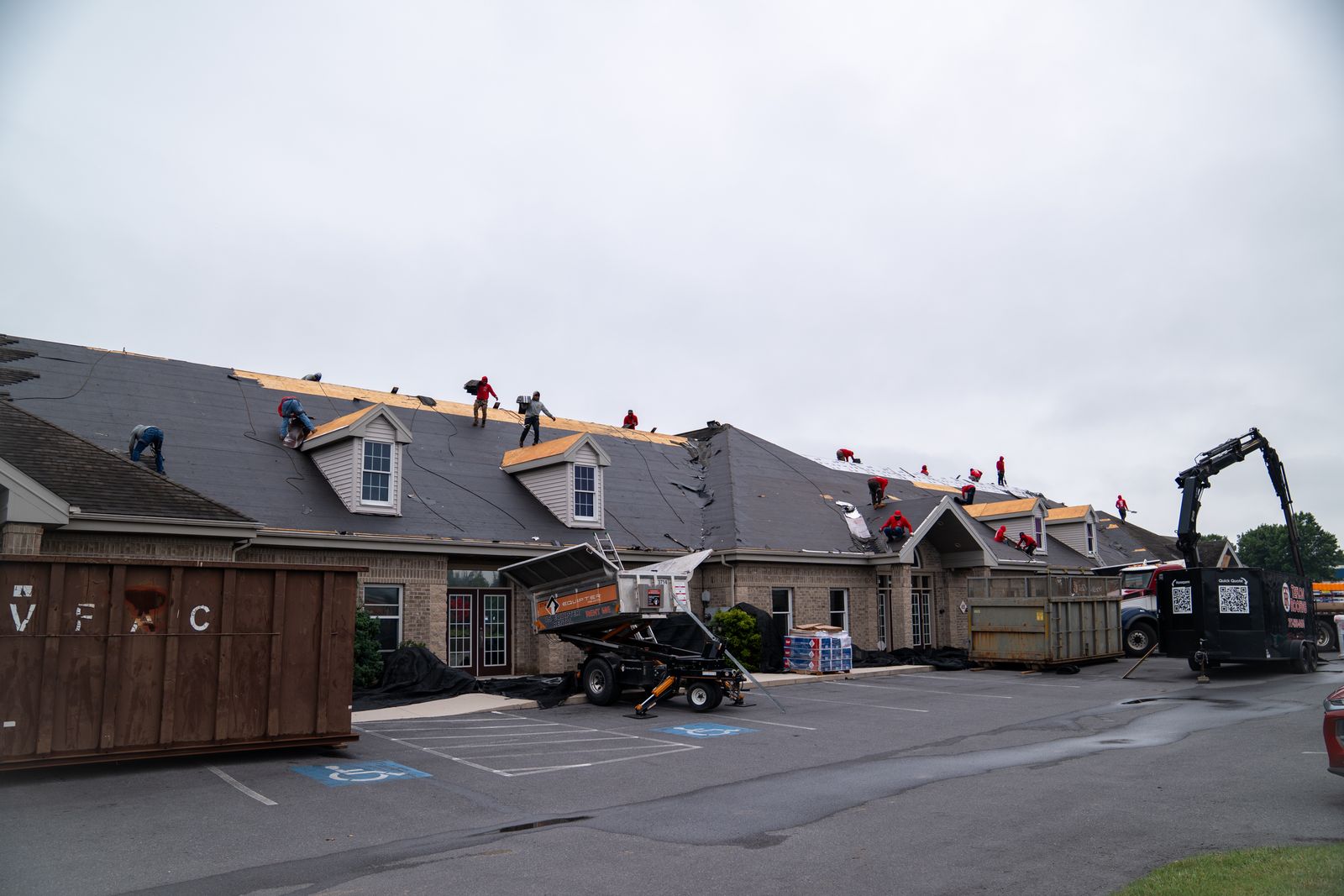
Equipment that cuts tear-off hours
The fastest way to cut hauling time is to shorten the distance debris travels. A drivable debris trailer like the Equipter 4000 parks right against the house and lifts its container to the roof edge (up to 12 feet), so tear-off drops straight in instead of being carried across the lawn. It holds 4.1 cubic yards and lifts 4,000 lbs, and it rolls back 4 feet to reach over landscaping.
That changes the hour buckets above: hauling shrinks, cleanup shrinks because debris is caught instead of scattered, and property repairs drop because nothing heavy crosses the lawn. For more on running leaner crews, see solving crew shortages and cutting overtime with the right equipment.

Labor-cost worksheet
Copy these lines into a spreadsheet and fill them in for your last five jobs:
- Squares installed.
- Total crew hours, split into stripping, hauling, cleanup, dump runs, installing and repairs.
- Average loaded hourly cost.
- Labor cost per square (formula above).
- Hauling + cleanup hours as a share of total hours.
- Estimated hours saved if hauling and cleanup dropped by the share you measure in a trial.
Then compare the saved labor with the monthly cost of the equipment. Our ROI calculator does that math for you.
Answers
Frequently asked questions
What is the labor cost per square for roofing?
It is your total crew labor cost for a job divided by the squares installed. Calculate it as crew hours times loaded hourly cost, divided by squares. The result varies widely by market, roof type and how efficiently tear-off and cleanup are handled.
How many roofers are on a typical crew?
Crew size varies with the job, the pitch and the company. What matters more for cost is how many crew hours go to non-installing work such as hauling debris and cleanup, which you can measure by timing each task.
How long does a tear-off take per square?
It depends on layers, pitch, material and how debris is removed. The best way to know is to time your own crew. Hauling and cleanup are often the largest variable, not the stripping itself.
How do you reduce roofing labor costs?
Measure where crew hours go, then shorten the distance debris travels. Catching tear-off at the roof edge, cutting dump runs and preventing property damage reduce paid hours without rushing the installation.
Run your own numbers
See what shorter tear-offs would be worth on your jobs with the Equipter ROI calculator.
Keep reading
Cost, ROI and how to try one.
Tear-off weight and dumpster count.
Cutting overtime with the right equipment.