
Year-end 2026
Buy Your Equipter 4000 Before December 31
Section 179 lets qualifying equipment be deducted the year it is placed in service, not spread across five. The window closes December 31 — and because the machine has to be delivered by then, not merely ordered, your real deadline falls earlier than the calendar suggests.
Updated October 9, 2026 · By the Equipter team, Leola, PA

This page explains what changed in the 2026 tax rules, why the real deadline falls before December 31, and what the Equipter® 4000 does on a residential tear-off. We build the machine, so read the product section with that in mind. Nothing here is tax advice — the numbers for your business come from your accountant.
What changed for 2026
Section 179 of the tax code lets a business deduct the cost of qualifying equipment in the year it is placed in service, rather than depreciating it over several years. Two things about it are different now than most contractors remember.
$2,560,000
Section 179 deduction limit, tax year 2026
$4,090,000
Spending level where phase-out begins
100%
Bonus depreciation, now permanent
The deduction limit for the 2026 tax year is $2,560,000, with the phase-out threshold starting at $4,090,000. For a contractor buying one machine, neither ceiling is the constraint — they matter to fleet buyers and to shops making several large purchases in the same year.
The second change is the one worth knowing. Bonus depreciation at 100% was made permanent under the One Big Beautiful Bill Act for qualifying property placed in service after January 19, 2025. It was scheduled to step down and disappear; it no longer does. Unlike Section 179, bonus depreciation has no dollar cap and no business-income limit, which is why it often does the heavier lifting on an equipment purchase.
What that combination means in practice: for most roofing contractors buying a single piece of equipment, the full purchase price can be deducted in the year the machine goes to work, instead of spread across five.
The deadline that actually matters
Equipment has to be purchased and placed in service by the end of your tax year — December 31 for calendar-year filers. Placed in service means on your lot and ready to work. Not ordered. Not in production. Not on a truck somewhere in Ohio.
Which means December 31 is not your deadline. Your deadline is whatever order date leaves enough time to build and deliver the machine before December 31, and that date depends on your configuration and the build queue.
Order as soon as possible to take delivery before December 31. Build slots fill from October onward. One call confirms whether your configuration still fits the timeline — and if it does not, we will tell you rather than let you find out in December.
Contractors who wait until the second week of December are usually buying a 2027 machine whether they intended to or not.
Does the Equipter 4000 qualify?
Most tangible business equipment qualifies for Section 179, including debris and material handling equipment used in your business. The general conditions:
- Business use above 50%. The equipment has to be used more than half the time for business.
- New or used both count. The equipment needs to be new to you, not new from the factory — which means a refurbished unit can be eligible too.
- Placed in service inside the tax year. The condition covered above, and the one that trips people up.
- Purchased, not leased. Lease structures are treated differently. If you are financing, ask how your specific agreement is classified.
State treatment varies. Some states conform to the federal rules, others cap or decouple from Section 179 and bonus depreciation. Your accountant will know how your state handles it.
What the Equipter 4000 does on a tear-off
The tax treatment changes when to buy. It does not change whether the machine earns its keep. That part comes down to what happens on the job.
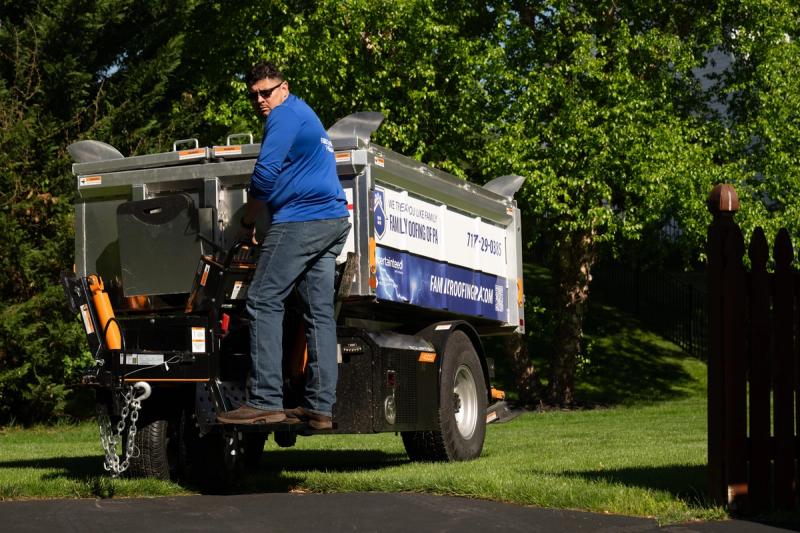
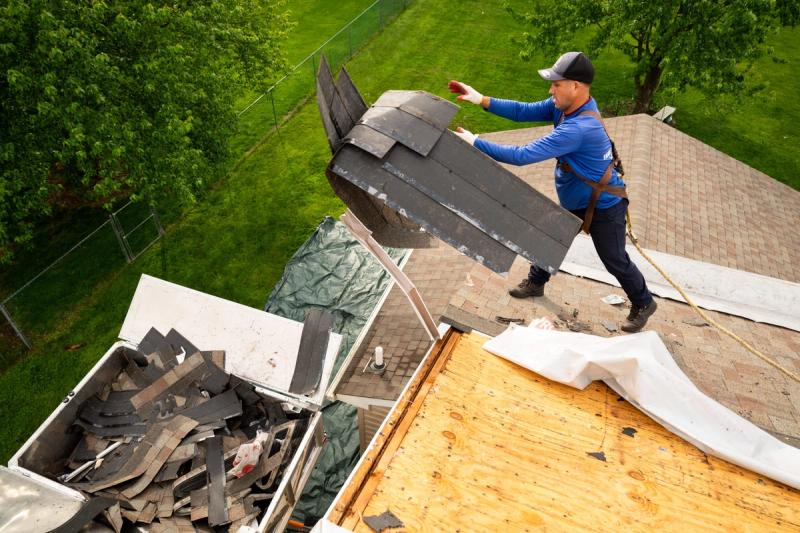
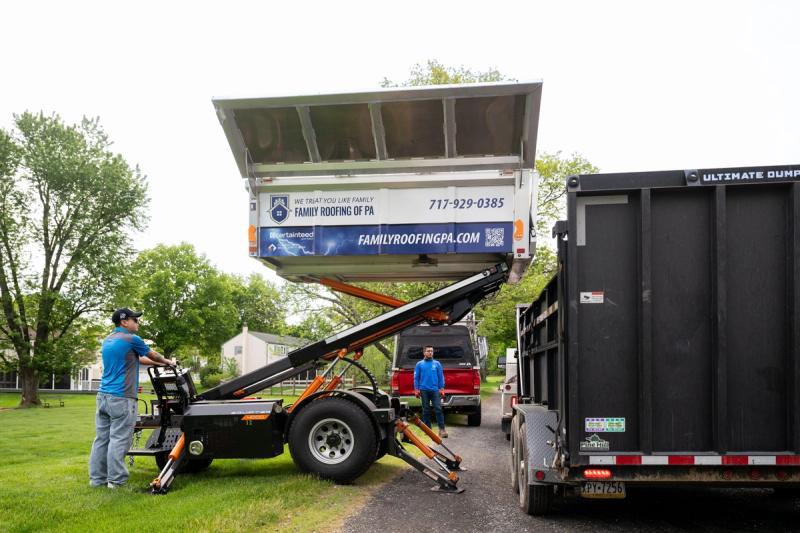
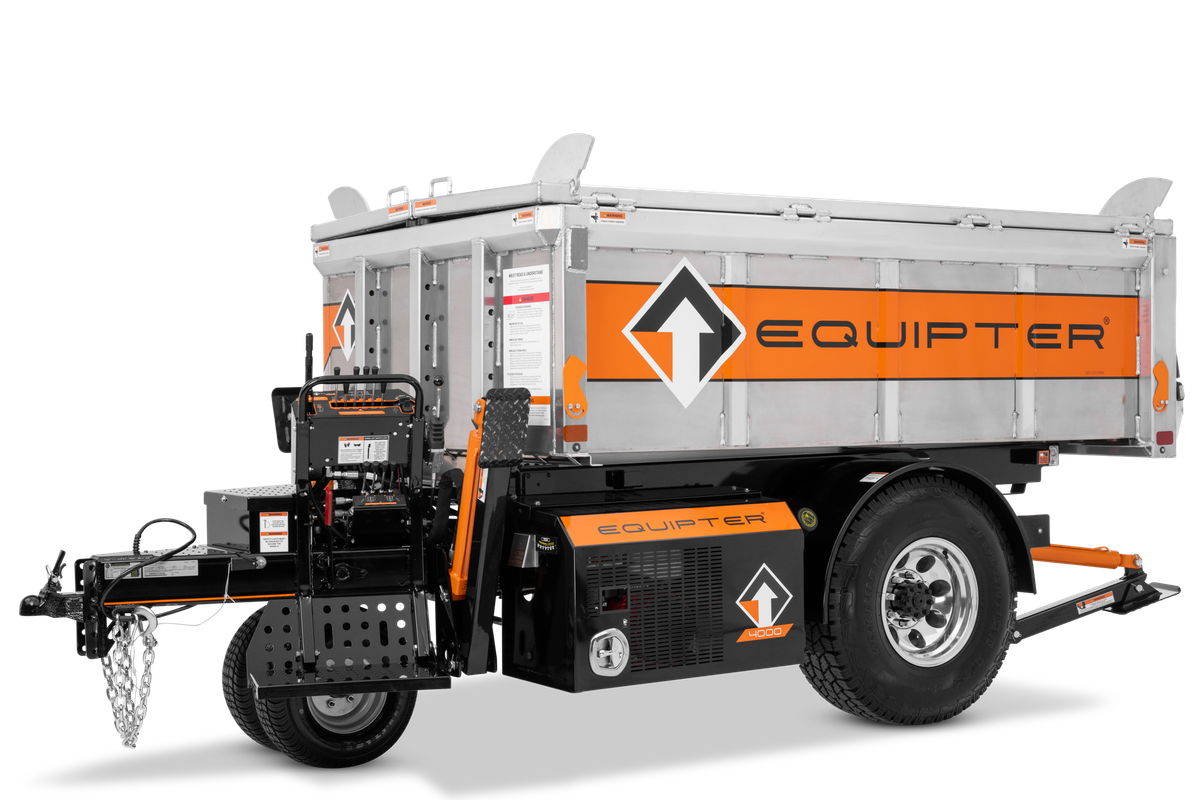
The Equipter® 4000 is towed to the job, unhitched, and driven under its own power to the side of the house. The container lifts 4,000 lbs to 12′0″ and holds 4.1 cubic yards, so the crew drops tear-off straight in from the eave instead of carrying it across the lawn or throwing it onto tarps and loading it twice. It rolls back 4 feet, which lets the container reach over shrubs, AC units and flower beds rather than parking in them.
12′0″
Lift height
4,000 lbs
Lift capacity
4.1 yd³
Container capacity
4 ft
Rollback reach
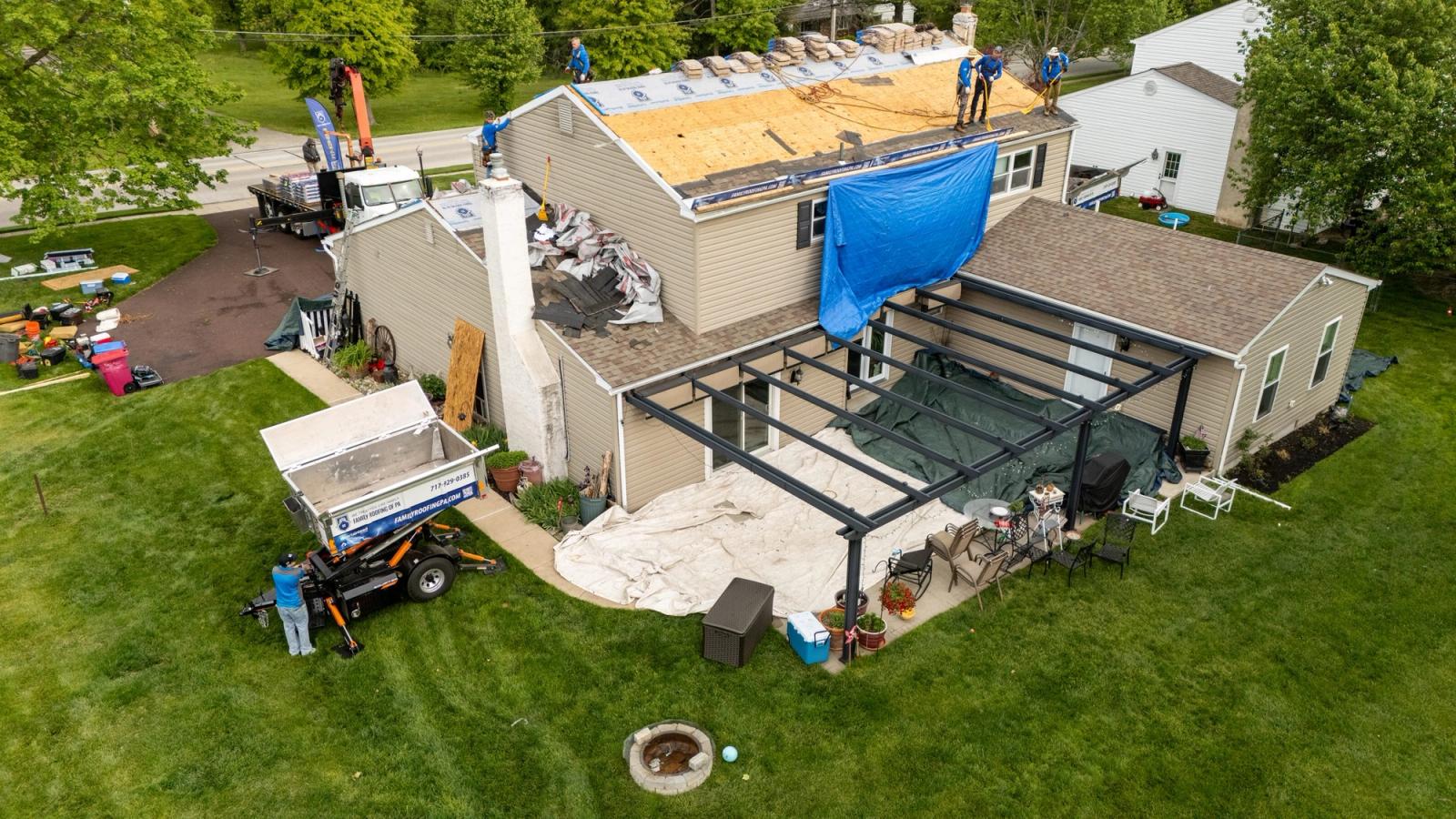
The debris gets handled once: off the roof, into the container, to the dump. The driveway keeps its surface, the lawn keeps its grass, and the homeowner gets a job site worth mentioning to a neighbor. That is what New Roof No Mess® describes — not a slogan about the machine, but what the property looks like when the crew leaves.
A 12-foot lift covers the eave on most one- and two-story homes. It will not reach a third story. If most of your work is taller than two stories, say so on the call and we will tell you straight whether this is the right machine.
Year-end checklist
Before you decide, work through these in order:
- Call your accountant first. Ask what a qualifying equipment purchase does to this year's return, and how your state treats Section 179 and bonus depreciation.
- Confirm the delivery timeline. Your configuration determines the build time. Get the real order-by date for your spec, not a general one.
- Decide new or refurbished. Both can qualify. A refurbished unit changes the price and often the availability.
- Sort financing early if you need it. Financing approval sits inside your timeline, not outside it, and it is the most common reason a year-end order misses the window.
- Check the lift height against your typical job. Two stories and under, the 4000 fits. Consistently taller, it does not.
- Place the order with enough runway. Ordering the week before Christmas is ordering a 2027 machine.
Quote Builder
See your price and your delivery window in a few minutes
Spec your Equipter 4000 in the Quote Builder and get pricing on your exact configuration. A rep follows up to confirm whether it can be built and delivered before December 31.
Step 1
Spec your machine
Pick the configuration and options your crews actually use.
Step 2
See your price
Pricing on your build, ready to take to your accountant.
Step 3
Confirm your delivery date
A rep confirms whether your spec lands before December 31.
Answers
Frequently asked questions
What is the Section 179 deduction limit for 2026?
The Section 179 deduction limit for the 2026 tax year is $2,560,000, with the phase-out threshold beginning at $4,090,000 of equipment spending. Separately, 100% bonus depreciation is permanent for qualifying property placed in service after January 19, 2025.
Does a debris trailer qualify for Section 179?
Most tangible business equipment qualifies, including debris and material handling equipment used more than 50% for business. New and used both count as long as the equipment is new to you. Confirm your specific situation with your tax professional.
What does "placed in service" mean?
Placed in service means the equipment is delivered and ready for use in your business, not merely ordered or paid for. For a calendar-year filer, the machine has to be on your lot and available to work before December 31 for the deduction to apply to that tax year.
When is the last day to order for 2026 delivery?
[ORDER-BY DATE] is the last order date for delivery before December 31, though the exact timeline depends on your configuration and the build queue. Call 717-661-3591 and we will confirm the date for your specific spec.
Can I use Section 179 on a refurbished Equipter?
Used equipment can qualify as long as it is new to your business and meets the other conditions. That includes refurbished units. As with any purchase, confirm the treatment with your accountant before you rely on it.
Is Equipter giving tax advice on this page?
No. Everything here is general information about how the deduction works and when the deadlines fall. We build equipment; we are not tax professionals. What a purchase does to your return depends on your income, your entity structure and your state, and only your accountant can tell you that.

Build it before the year closes
Spec your Equipter 4000 and see pricing, or call and we will confirm whether the delivery timeline still works for this tax year.
Equipter does not provide tax advice. This page is general information only and is not a recommendation about your tax position. State treatment of Section 179 and bonus depreciation varies. Consult your tax professional.
Keep reading
Scissor-lift, hydraulic and drivable, compared.
Cost, damage and crew time compared.
The numbers to track before you add equipment.