
Tight access
Power Buggy vs. Tracked Dumper vs. Portable Dump Container for Tight-Access Debris
Tight-access jobs break the usual debris plan. A townhome with a shared wall, an alley lot, a gated backyard or a rowhouse with no driveway leaves no room for a dumpster next to the work. The debris has to travel, and something has to carry it.
Updated September 29, 2026 · By the Equipter team, Leola, PA
Contractors usually look at three machines for that: a power buggy (also called a motorized or electric wheelbarrow), a tracked dumper, or a portable dump container. Here is how they compare, and how to pick one for your jobs.
Tight-access jobs: townhomes, alleys and gated yards
Before choosing equipment, measure three things on a typical job:
- The narrowest point on the route from the work to the dump point: gate, side yard, walkway or doorway.
- The distance from the work area to where the debris leaves the property.
- The surface: finished lawn, pavers, gravel, sidewalk or mud.
Those three numbers decide the machine more than any brochure does.
Power buggies and motorized dump carts
A power buggy is a small, engine- or battery-powered cart with a tipping bucket. The operator walks behind or rides on it. Electric wheelbarrows and motorized dump carts are the lighter end of the same category.
Where they fit: short runs, narrow paths and small loads, such as moving soil, gravel, concrete or bagged debris a few yards at a time. Ride-on power buggies are usually sold by bucket size, commonly 10, 16 or 21 cubic feet, with 16 cubic feet the most popular. Common ride-on models are roughly 3 to 4 feet wide.
Where they fall short: capacity per trip is small, most tip at ground level only, and every load still has to be shoveled or dumped into something bigger at the curb. On a roof tear-off, that means a lot of trips and a dumpster anyway.
Tracked dumpers and mini dumpers
A tracked dumper, or mini dumper, puts a larger tipping bed on rubber tracks. Some models have a high-tip function that raises the bed before dumping. They carry more than a power buggy and handle soft ground well.
Where they fit: landscaping, excavation and demolition debris over rough or muddy ground.
Where they fall short: they are heavier machines that usually need a trailer to reach the site, tracks can mark finished turf when turning, and the load still ends up transferred into a dumpster or truck.
Portable dump containers: the Equipter 2500 and 2000
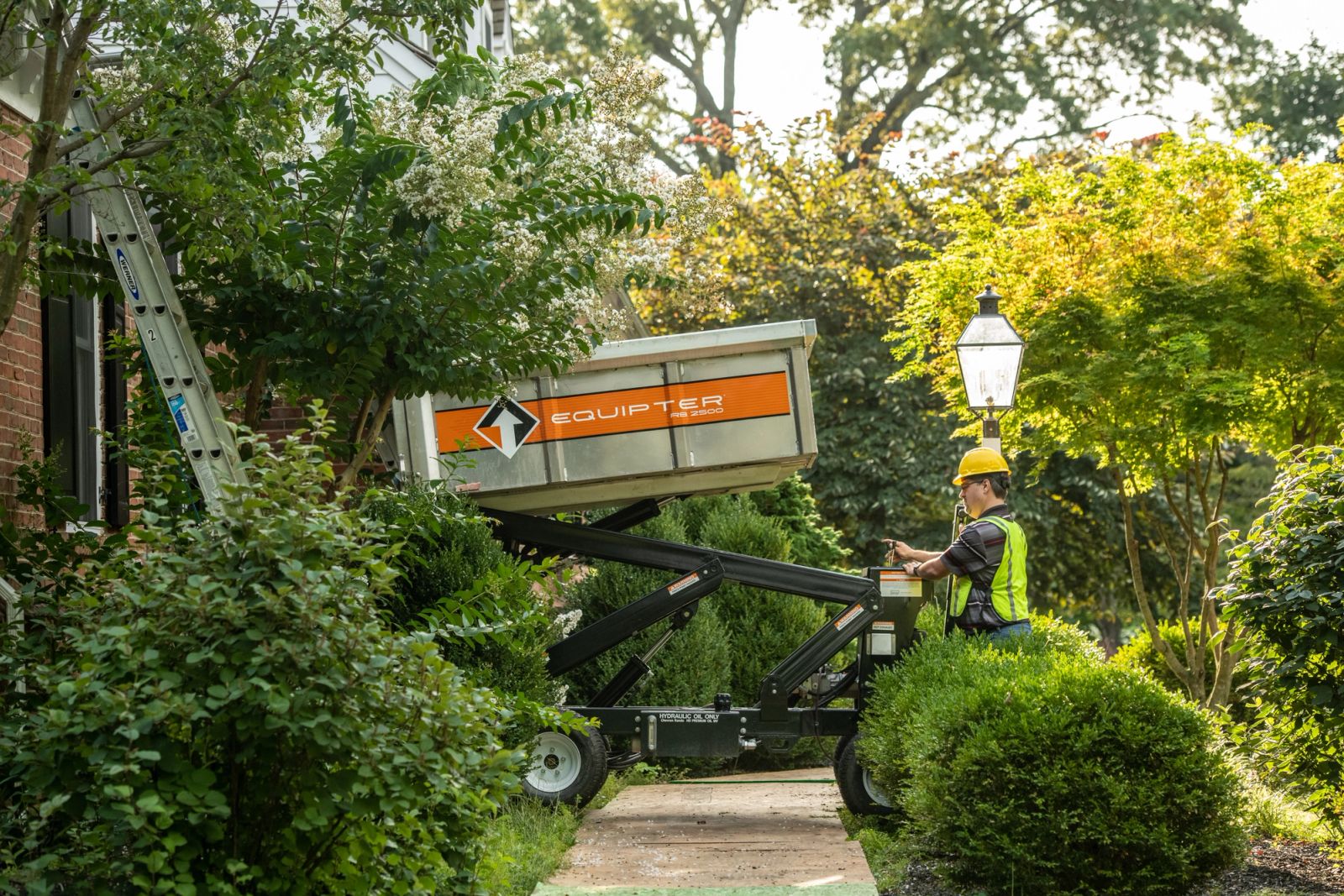
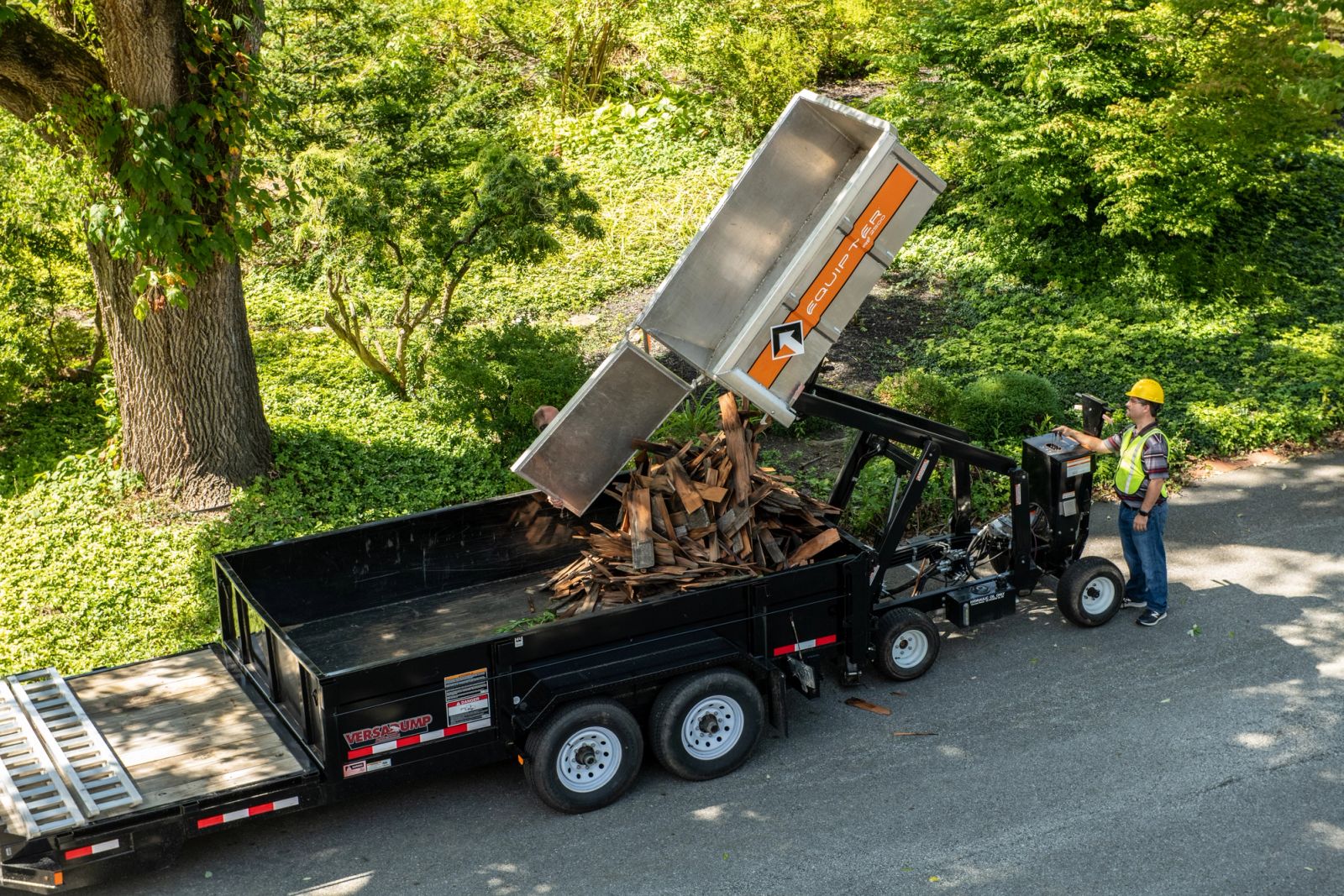
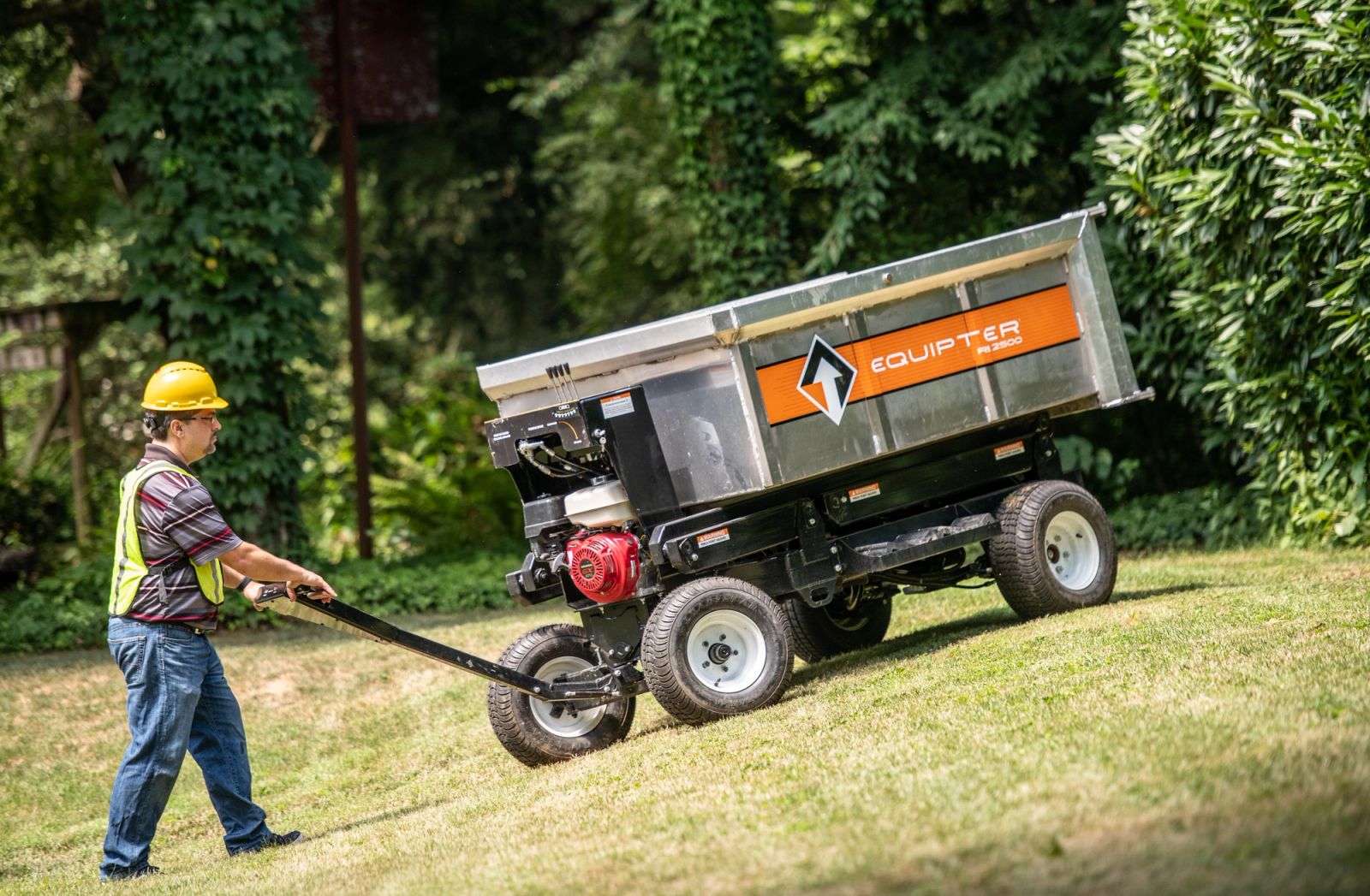
A portable dump container is a self-propelled container that drives to the work, lifts to catch or load debris, and then lifts and dumps into a larger container, trailer or truck. That removes the double handling at the curb.
- The Equipter 2500 lifts 2,500 lbs to 7′2″ and holds 1.5 cubic yards. It weighs 1,640 lbs, so it is easy to transport.
- The Equipter 2000 lifts 1,500 lbs to 7′3″ and holds 1.0 cubic yard. Its body is under 3 feet wide, so it fits through gates and walkways where larger machines cannot.
Both run on Honda engines and have independent outriggers for stable lifting. The Equipter Dump Trailer is designed to haul either model between jobs and to take their loads.
Capacity and access comparison
- Power buggy: about 10 to 21 cubic feet per load (roughly 0.4 to 0.8 cubic yards); dumps at ground level.
- Tracked dumper: sizes vary widely by model; good on soft ground; usually trailered to site.
- Equipter 2500: 1.5 cu yd; lifts 2,500 lbs to 7′2″; lifts and dumps into a larger container.
- Equipter 2000: 1.0 cu yd; lifts 1,500 lbs to 7′3″; body under 3′ wide for the tightest access.
Rent or buy
If tight-access jobs are occasional, rent and time the job. If they are a regular part of your work, such as city rowhouses or townhome communities, ownership usually wins because the machine is available the day the job starts. Many rental partners carry Equipter equipment; check our rental locations.
For a closer look at choosing between Equipter models, read Equipter 4000 or 2000: which portable dumpster is best for your business?
Answers
Frequently asked questions
What is a power buggy used for?
A power buggy is used to move heavy loads such as concrete, soil, gravel and debris over short distances on a job site. It replaces wheelbarrow trips and works best on narrow paths where larger equipment cannot go.
Power buggy vs. tracked dumper: what is the difference?
A power buggy is a small wheeled cart for light loads and narrow paths. A tracked dumper is larger, carries more and runs on tracks for soft or rough ground. Both usually dump at or near ground level.
What fits through a narrow gate for debris removal?
Measure the gate first. The Equipter 2000's body is under 3 feet wide, narrower than many ride-on power buggies, so it fits through gates and walkways where larger machines cannot. The Equipter 2000 also lifts its load to dump into a larger container.
Can you rent a motorized dump cart?
Yes. Many equipment rental stores rent power buggies and motorized dump carts by the day. Equipter portable dump containers are also available through our rental network in many areas.
Match the machine to the gate
If your tightest jobs are townhomes and gated yards, compare the Equipter 2000 and 2500 and build the one that fits your work.
Keep reading
Which portable dumpster fits your work.
Trailer options for roofing debris.
Estimate tear-off weight and loads.