
For HVAC contractors
HVAC Crane: Setting Rooftop Units Without a Boom Truck
Setting a rooftop unit is often the most expensive hour of an HVAC install. The equipment has to go from the truck to the roof curb, and for most crews that means scheduling a crane service or a boom truck, waiting on its availability, and paying for the whole visit even when the lift takes minutes.
Updated September 29, 2026 · By the Equipter team, Leola, PA
This guide covers how rooftop units get lifted today, how to plan the lift, and where a compact towable crane fits.
How rooftop units get lifted today
HVAC contractors usually use one of four methods:
- Crane service: a hired mobile crane and operator for the lift.
- Boom truck: a truck-mounted boom, from a rental yard or a supplier.
- Rooftop hoist or gin pole: for lighter equipment on roofs with a suitable anchor point.
- Owned compact crane: a crane the contractor keeps and brings to each job.
For ground-mounted condensers, the challenge is usually getting the unit across the yard to the pad, not up. That is a different problem with its own equipment, such as a towable forklift.
Boom truck vs. crane rental vs. owning a compact crane
Crane rental gives you capacity and reach, but you work on the crane company's schedule. If the install slips, the lift slips with it, and the crew waits.
Boom trucks are faster to book but need a firm, level setup spot close to the building, which residential and small commercial sites often lack.
Owning a compact crane puts the lift on your schedule. The crane travels with the crew and sets up when the curb is ready. The trade-off is that it must match the weight and reach of the units you set most often.
Weight and reach planning
Plan every lift from two numbers: the weight of what you are lifting and the horizontal distance from the crane to where it has to land.
- Get the actual weight from the unit's data plate or submittal, plus curb adapters, rigging and any packaging left on.
- Measure the reach from where the crane can safely set up to the center of the curb.
- Check the load chart for that exact reach. Capacity falls as the boom extends.
- Confirm the setup surface can support the crane and its outriggers.
- Check overhead hazards, especially power lines, and follow the required clearances.
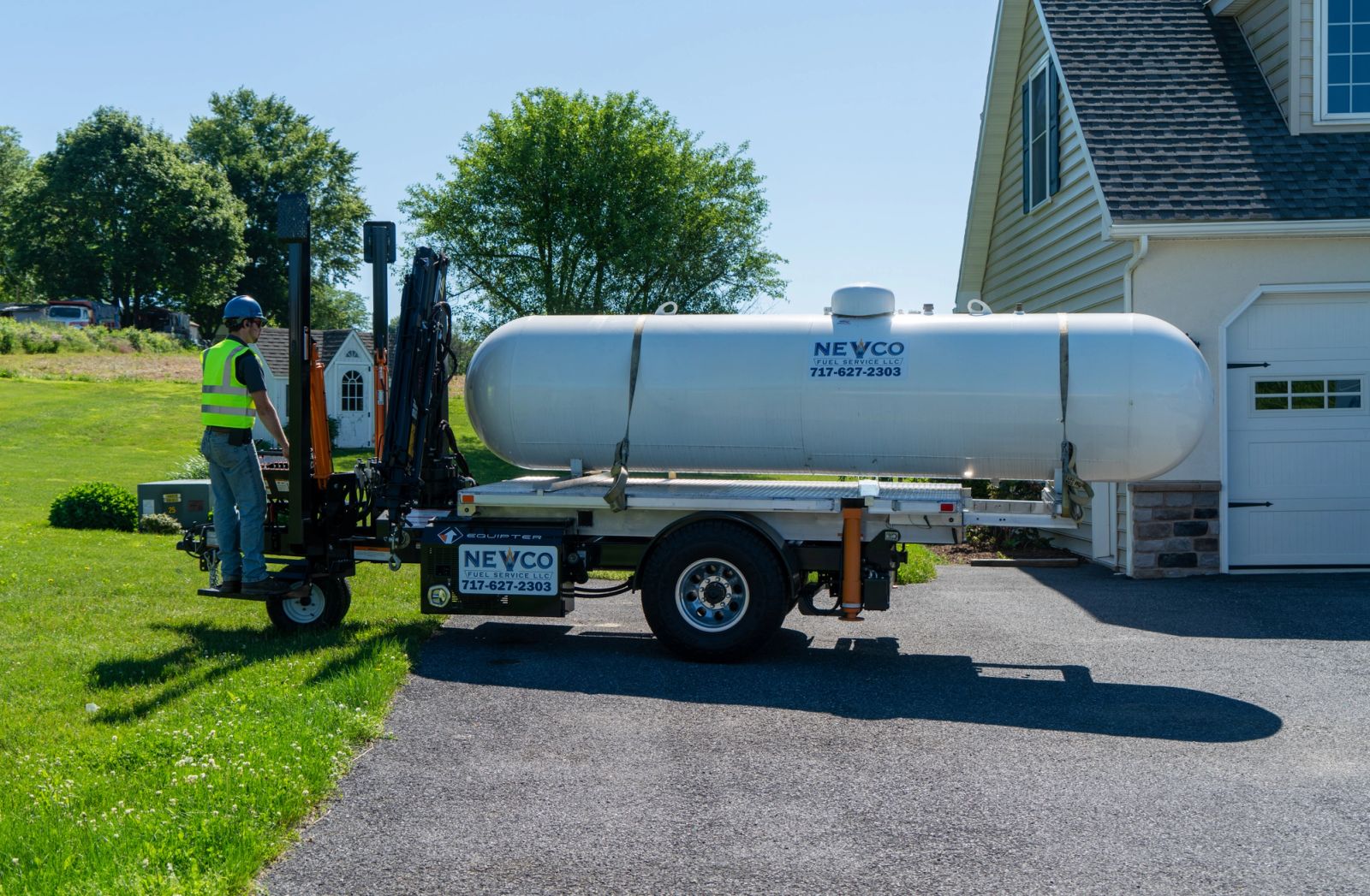
Where the Equipter 5400 fits
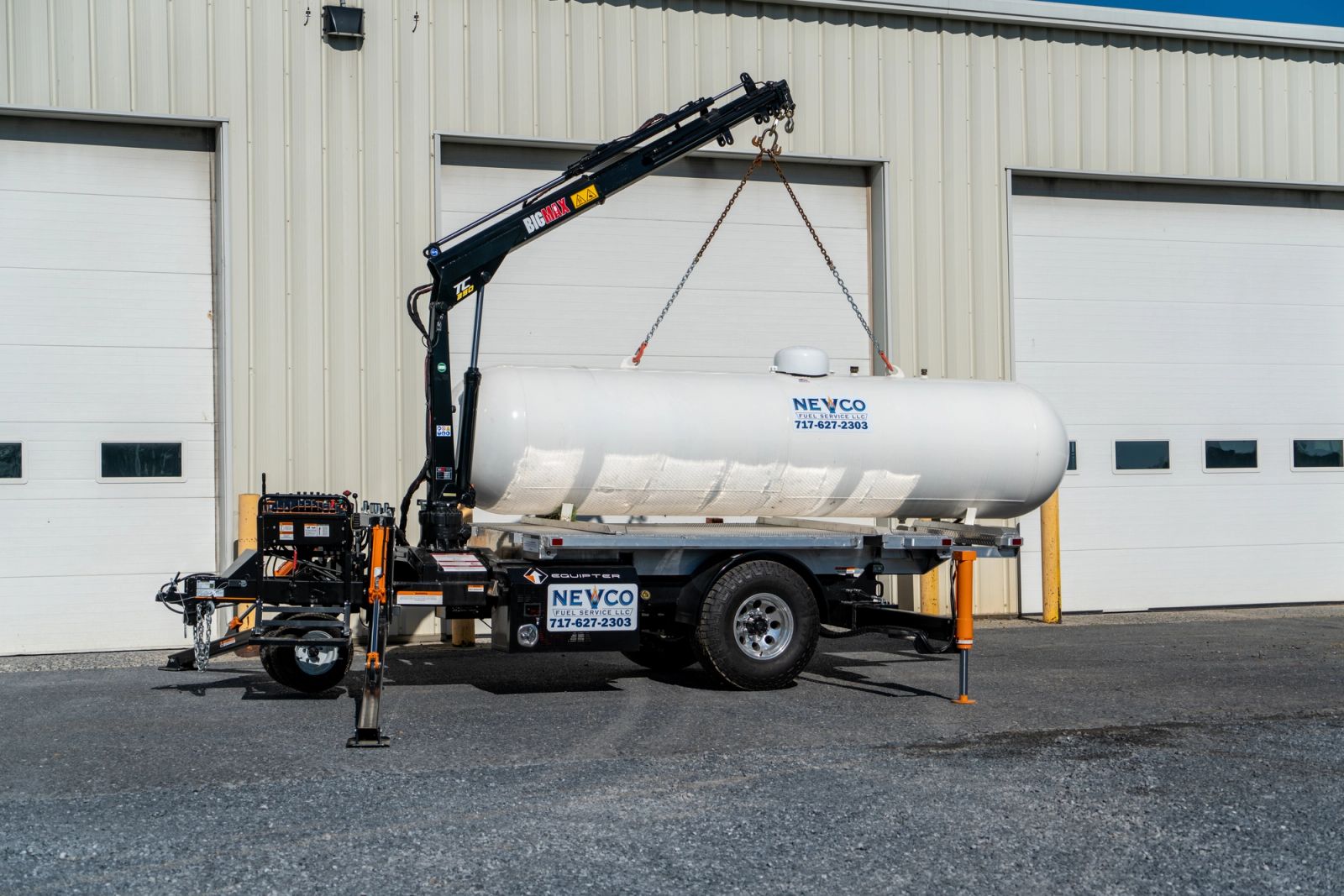
The Equipter 5400 is a towable, self-propelled mobile crane. It tows behind a truck, unhitches, and drives to the setup point on wide tires designed to minimize ground disturbance. It lifts up to 4,431 lbs close in, reaches 23 feet, and lifts 893 lbs at full extension. The operator runs it by remote control and independent outriggers stabilize each lift.
That range suits many residential and light commercial jobs where the unit, the roof edge and the setup spot are close together. For heavier units or longer reaches, a larger crane is still the right tool; the load chart decides.
Safety and rigging checklist
- Qualified operator and rigger for the equipment and the lift.
- Load weight verified, not estimated.
- Lift planned at the actual reach against the load chart.
- Outriggers set on firm ground, with pads where needed.
- Tag lines to control the load.
- Clear drop zone; no one under a suspended load.
- Power-line clearance confirmed before the boom moves.
- Weather checked, especially wind for large, flat units.
For more on equipping an HVAC business, see best HVAC tools for the ultimate HVAC pros.
Answers
Frequently asked questions
What equipment lifts HVAC units onto a roof?
HVAC rooftop units are usually lifted with a crane service, a boom truck, a rooftop hoist for lighter equipment, or a compact crane the contractor owns. The right choice depends on the unit weight, the reach to the curb and site access.
How much does an HVAC crane rental cost?
Rates vary by market, crane size and duration, and many companies charge minimum hours plus travel. Get quotes that include the operator, setup and any permits so you can compare them with owning a compact crane.
How heavy is a rooftop unit?
Rooftop unit weight varies widely by capacity and configuration. Always use the weight on the unit's data plate or submittal, and add curb adapters and rigging, rather than estimating.
Put the lift on your schedule
If crane scheduling is holding up your installs, talk to our team at 717-661-3591 about whether the Equipter 5400 fits your units, or build your 5400.
Keep reading
Choosing a compact crane.
Equipping an HVAC business.
Rooftop material loading compared.