
Roof loading
Roofing Crane vs. Boom Truck vs. Conveyor: How to Get Shingles on the Roof
Getting shingles on the roof is the first job of every re-roof, and there are four common ways to do it: a ladder hoist, a conveyor truck from the supplier, a boom truck, or a crane. Each one fits a different house, a different crew and a different budget.
Updated September 29, 2026 · By the Equipter team, Leola, PA
The short answer: use supplier conveyor or boom delivery when the truck can park close with clear overhead space; use a ladder hoist on tall or steep roofs; and use a compact crane when you need to place heavy material yourself, on your schedule, where a delivery truck cannot reach.
This guide covers the conveyor, boom and crane options. Ladder hoists and shingle lifts have their own guide: shingle lifts and ladder hoists.
The four ways to load a roof
- Ladder hoist: a powered platform on a track leaned against the house. Low cost, high reach, small loads.
- Conveyor truck: a supplier truck with a belt boom that runs bundles straight onto the roof.
- Boom truck: a supplier or rental truck with a knuckle or straight boom that lifts whole pallets.
- Crane: from a rented mobile crane to a compact towable crane you own and run yourself.
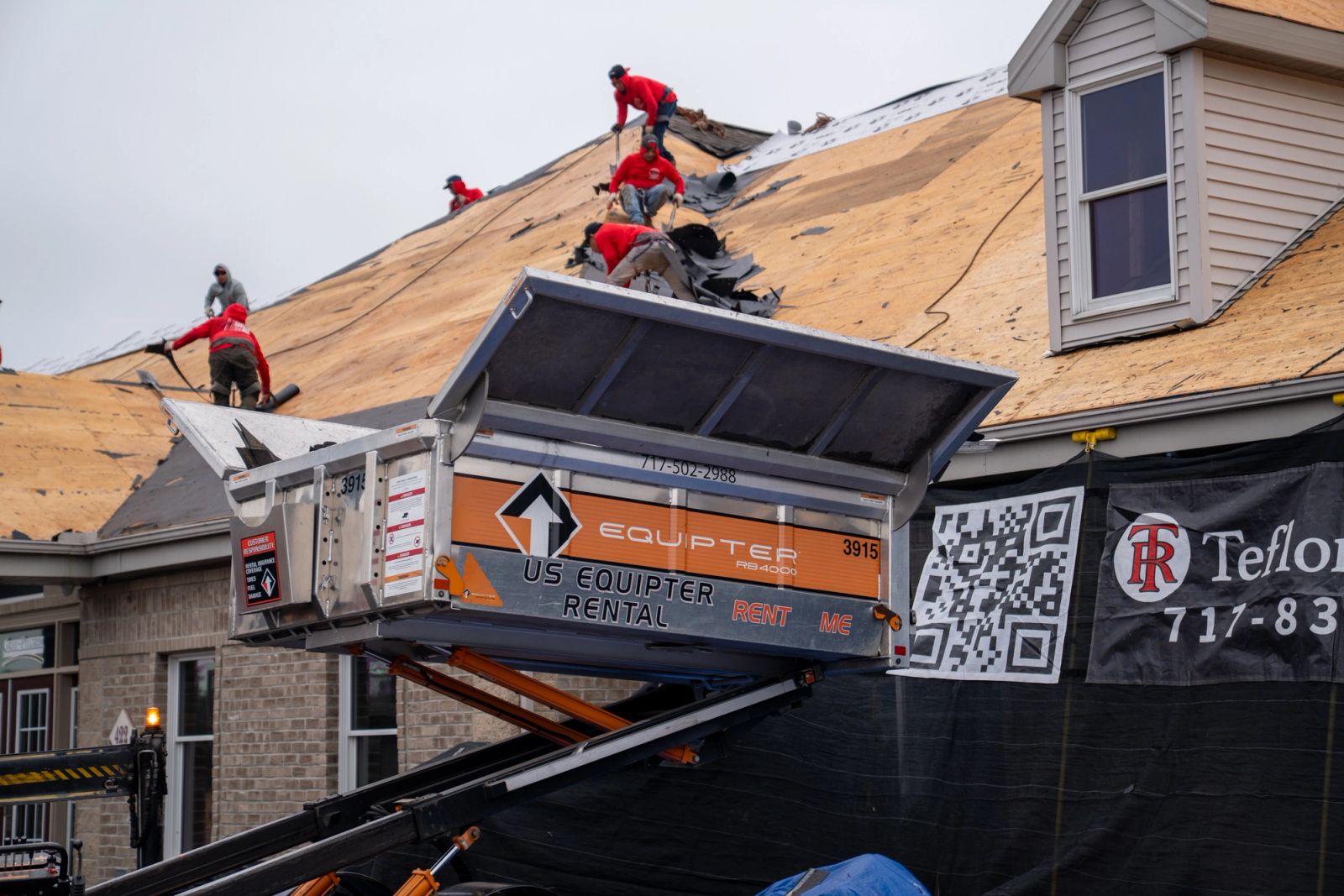
Conveyor truck: pros, cons, and when delivery fails
A roofing conveyor truck is usually a service your supply house provides rather than equipment you buy. The belt runs bundles from the truck bed to the roof, and the supplier can stage a full job before your crew shows up.
It works well when the truck can park near the house, the roof edge is within the conveyor's reach, and there are no power lines or trees in the way. Most truck-mounted roofing conveyors run roughly 20 to 43 feet long, and some telescoping models extend past 50 feet. Usable reach is about the length of the boom, and because the boom climbs at an angle, the farther the truck has to park from the house, the less height it can reach. Industry safety guidance says to keep the boom at least 10 feet from any power line and to treat every overhead wire as live. When any of those conditions fail, the delivery ends at the curb and the pallets become your crew's problem.
Boom truck roof loading
A boom truck lifts full pallets of shingles, underlayment or metal panels onto the roof in a few picks. On large commercial decks and new construction it is often the only practical way to load.
The trade-offs are scheduling and setup. You wait for the truck, it needs a clear, firm place to set up, and it leaves when the delivery is done. For a mid-job top-up or a second trip, you are back in the queue.
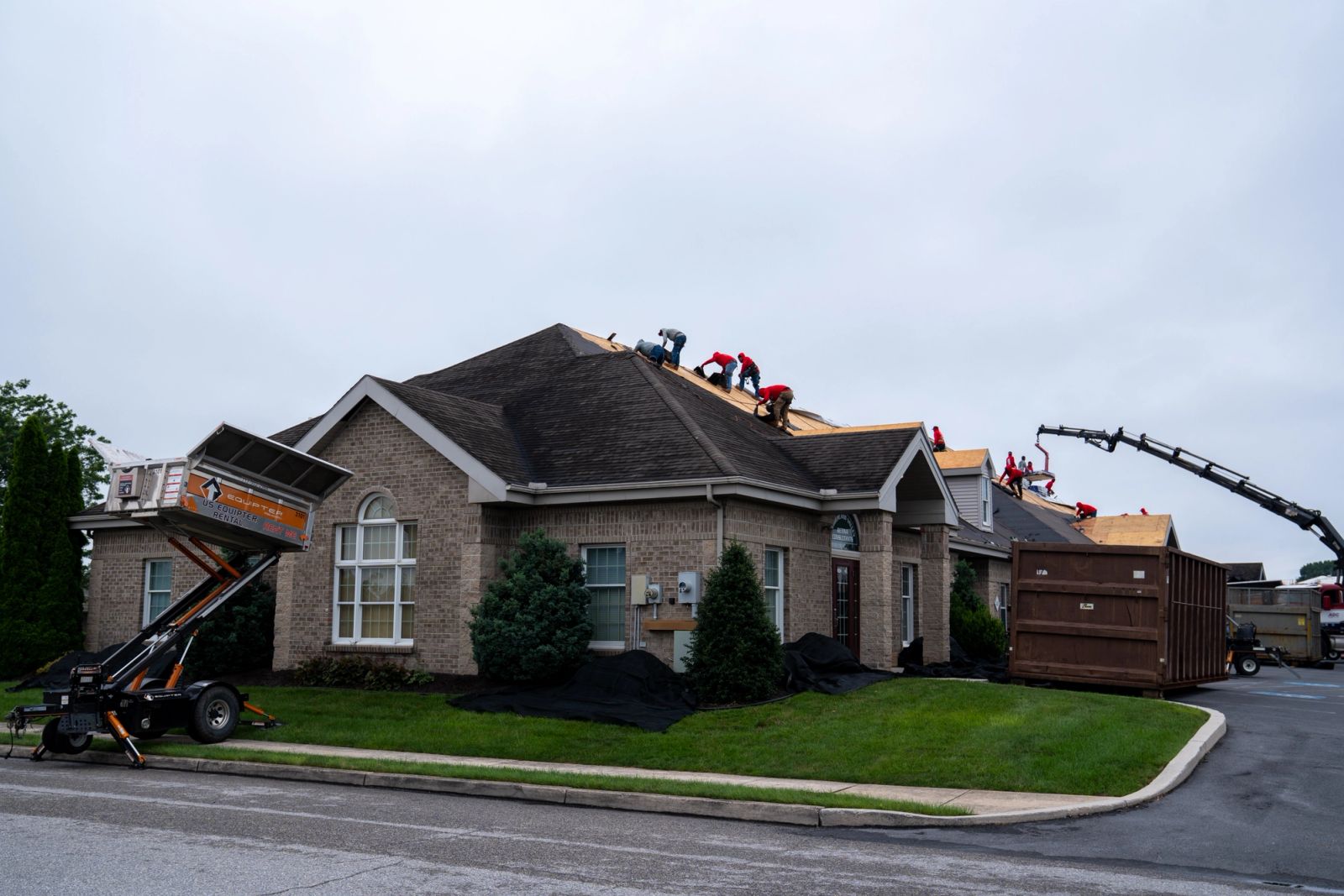
Using a compact mobile crane
A compact crane you own changes the timing: material goes up when your crew is ready, not when the delivery slot opens. The Equipter 5400 is a towable, self-propelled crane that hitches to a pickup, then drives itself to the setup spot on wide tires designed to minimize ground disturbance.
It lifts up to 4,431 lbs and reaches 23 feet, and it still lifts 893 lbs at full extension. It runs from a remote control, so the operator can stand where they can see the load. It also sets outriggers before a lift. That makes it a fit for pallets of shingles, metal roofing, HVAC equipment and other heavy picks on residential and light commercial jobs.
Like any crane, it has limits. Capacity drops as the boom extends, so plan each pick against the load chart, and it will not replace a large boom truck on tall commercial buildings.
High-reach material handling: the Equipter 7000
Some jobs need reach and lift height more than a crane hook. The Equipter 7000 is a towable boom handler with 4,000 lbs of lift capacity and a 25′5″ lift height. It is available for pre-order.
Cost and crew-time comparison
Rates vary by market, so price each option locally. Use these questions to compare them fairly:
- Who controls the schedule? Supplier delivery runs on their route. Owned equipment runs on yours.
- How many people does it tie up? A ladder hoist needs someone loading at the bottom and someone at the top. Remote-operated equipment frees hands.
- What happens on a second trip? Mid-job material and return trips cost the most with delivery services.
- What does setup cost the property? Heavy trucks on lawns and paver driveways cause callbacks.
- What else can it do? Equipment you own can also set HVAC units, move pallets across the property or place materials on other jobs.
For a rough labor comparison, count the crew-hours spent getting material from the curb to the roof on your last five jobs. That number, multiplied by your loaded hourly rate, is what the loading method is really costing you.
Answers
Frequently asked questions
How do you get shingles on a roof without a boom truck?
Use a ladder hoist or shingle lift for bundle-by-bundle loading, ask your supplier for conveyor delivery, or place pallets yourself with a compact towable crane. On one- and two-story homes, a drivable lift that raises material to the eave is another option.
What is a roofing conveyor truck?
A roofing conveyor truck is a delivery truck with a belt-driven boom that carries shingle bundles directly from the truck to the roof. It is usually a service your roofing supplier provides with the material delivery.
Can you rent a crane for roofing?
Yes. Crane services and equipment rental yards rent cranes by the day or by the lift. Equipter's towable crane is also available through our rental network in many areas.
How much weight can a roofing crane lift?
It depends on the crane and how far the boom is extended. The Equipter 5400 lifts up to 4,431 lbs close in and 893 lbs at its full 23-foot reach. Always plan picks from the load chart.
Put a crane on your own schedule
If waiting on delivery trucks is slowing your jobs down, build your Equipter 5400 or call us at 717-661-3591 to talk through your setup.
Keep reading
Choosing a compact crane.
The ladder-hoist side of roof loading.
Setting rooftop units without a boom truck.